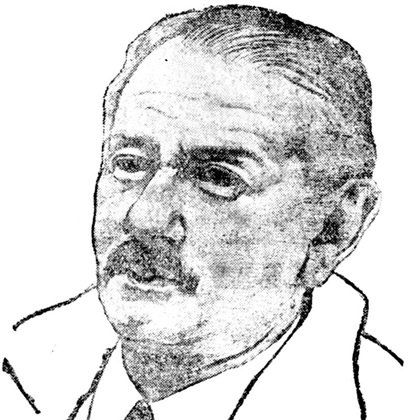
Moritz Heymann was born on 2 July 1870 in Breslau. He studied under Albrecht Bräuer, and later at the Academy of Arts in Berlin, followed by the Academy of Fine Arts in Munich under Carl von Marr.
In 1902, Moritz Heymann founded the Schule für zeichnende Künste und Malerei (School of Drawing and Painting) in Munich. Over the following three decades, it developed into one of the city’s most prestigious private art schools, where over 5,000 students from all over the world studied drawing and lithography. Internationally renowned artists such as Max Unold, Hermann Euler and Maria Luiko began their careers by studying under Moritz Heymann.
As an artist, Moritz Heymann was one of the leading representatives of Munich Impressionism. He was already well known for his lithographs and drawings before he increasingly devoted himself to painting. Moritz Heymann exhibited regularly at the Glaspalast in Munich and was represented in many major exhibitions throughout Germany. He was also a member of the Luitpold Group, an artists’ association.
Owing to his Jewish heritage, with the rise of National Socialism Moritz Heymann was subjected to increasing persecution. Despite mounting pressure from the authorities and severe financial hardship, he kept his school running until he was forced to close it in 1936. Moritz Heymann died on 29 January 1937. Unmarried and childless, he left no direct descendants. His legacy lives on through the thousands of artists he inspired and through the timeless quality of his work.